Showing posts with label math. Show all posts

Sunday, November 08, 2009

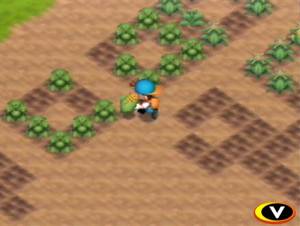
The Strategy and Ethos of Optimized Farmville

Introducing Farmville

My girlfriend recently became obsessed with a Facebook game called Farmville, which has become the most popular game Facebook has over the last five months, and by way of strengthening our relationship and indulging her casual nerdiness as she does for my more intense variety, I decided to check it out. As a gamer I tend to engage primarily with engrossing long-form gaming experiences. I think of a long form gaming experience as something where you progress through increasing levels of difficulty tied together by a narrative, and in which very often your character or state in the game develops according to choices you make. And I think of an engrossing game as one that demands your full attention, you play the game when you're ready to sit down at home, turn off the lights, unplug your phone, de-wire your doorbell, load up on food for the weekend and hunker down to just play, rather than something you idly mess around with when you're bored.

Exceptions to long form games would include puzzle games or games played competitively, and exceptions to "engrossing" games would include RPGs in some cases(FFXII is the worst offender that I'm aware of, although I certainly play RPGs) as well as a new brand of game exemplified by Facebook's Farmville. Farmville works on a different timetable than most games, it's real-time, but not in the sense of a game like Zelda where an hour takes a minute to pass, it runs on real-world time. You plant crops that you can only come back and harvest after a day, multiple days, or hours. It's not a game designed to be played full-time, it's a game designed to draw you back in spurts all throughout the day.

Farmville and Other Farming Games

Oddly enough, I am no stranger to the world of simulated farming games, I've played games in the Harvest Moon series for a while, which are designed to be played in a sort of "game real time" with no downtime between accomplishing things. You have many of the same features as Farmville, you plow fields, raise animals, make investments in seeds, harvest crops, and then re-buy more seeds to increase your capital, while sometimes investing in larger projects like houses. Farmville takes the farming theme a step further in letting you interact with nearby farms and show off your farms to your friends, while it also leaves out some features in terms of having a secondary system in the game for making friends with people while putting your crops and goods to a secondary purpose as gifts. Unlike the Harvest Moon games the social aspects of Farmville are largely independent of the core economy of the game. There's not a significant world to interact with outside your farm, and it also lacks the mechanics used by the Rune Factory spinoffs which introduce crafting and combat to the world to provide a further purpose for all the money raised and goods produced.

A few parallel elements are handled differently: Harvest Moon makes a big deal out of clearing your field so that you can reclaim all the space to plant crops, Farmville has all the space initially available, the way you increase your usable farmland is to buy more. In Harvest Moon (and a limited-round board game that involves farming called Agricola), a plowed field is plowed forever, you can keep re-using it to plant more crops of different types, while Farmville increases your clicking requirements by making you re-plow a field in between each crop you plant. In Harvest Moon, animals are a useful source of fixed income year-round since you have to deal with seasons when you can't grow certain crops, in Farmville animals seem like almost an afterthought since they provide nothing close to the money gained by crops, which require far more time and maintenance, which is what the game is built to reward. Quite a few features of Farmville simply end up as decorative, sometimes because they are intended as such, and sometimes because they're completely outpaced by other factors of the game in making money.

Farmville and Optimization

My girlfriend and I noticed that people used a wide variety of strategies in playing Farmville, some filling up their field with a single crop, raising a lot of animals or simply none, and their farms ended up looking very different for non-aesthetic reasons. So we decided to run the numbers Harvest Moon style and figure out what crops gave you the best return. There are two main resources you get in Farmville, coins which you use for your investments, and XP, which lets you level up and gain access to more crops and goods. Crops have turn-around times ranging from 2 hours to 4 days, offering larger or smaller returns. So the two things we wanted to calculate were the profit per hour for each crop, the XP per hour, and in some cases the XP per hour per coin, if your goal was to level up as quickly as possible where coins were your limiting factor.

A spreadsheet quickly (relative to the amount of time spent playing Farmville) showed that the lone 2 hour crop had the best profitability simply because of how often you could flip it and re-plant it, although later on in the game the margins of longer-running crops catch up, which also means that the game after a certain point no longer takes regular two hour obsessive re-checking to maximize profitability, you can be on an 8 or 10 hour schedule. We also noticed that some of the worst crops in the game were being heavily used by several players, and that in some cases the next 10 crops you could look forward to unlocking offered no improvements in profitability over the previous ones. Figuring out what crops to plant optimally is a calculation of the most profitable crop you have access to over the time interval at which you next expect to check the game.

While most of the fixed income assets of the game are amazingly inferior in profitability compared to the benefits of planting crops, there is an expensive building that offers more profitability than using the same stretch of land for crops, which raised the question of when it's appropriate to make that investment. We eventually realized that while on a per-square basis, the building beat the benefits of growing crops, it was a worse utilization of capital than using your money to fill your field with crops and harvest them continually. If you were in a situation where squares were a limiting factor and you had enough capital to grow crops on the rest of your field, you should buy the expensive building, but if you were in a situation where capital is the limiting factor and you could either buy the building or fill your field with crops, you should fill your field with crops.

The single most profitable long-term investment is expanding the size of your field to give you more squares to farm, since after a certain point your total assets are too high to be used on your entire field, although obviously buying a larger field is only worth it if you can still fill your field with your leftover capital, or else you're cutting your income for no reason. The only other trade-off worth considering is increasing your XP as quickly as possible to get access to better crops and assets compared to increasing your coins as quickly as possible to gain existing resources. However, those goals overlap closely enough when you use fast growing crops to not represent much of a dilemma. From the track my girlfriend seems to be on, if she keeps re-investing her capital in the most profitable crops and increasing the size of her field, she'll hit the maximal levels of prosperity the game is capable of representing, and at that point have little to do but decorate.

Pursuing the goals of ruthless optimization revealed a few things: the optimal strategy is fairly easy to discover when you run the numbers, and disappointingly predictable: you fill your field with the best crop available to you, which is what we noticed most of the top players doing. A lot of players preferred to keep an area of their farm "just for fun" and fill it with the gameplay features that were decorative by design or hopelessly inefficient, while using the bulk of their field for wealth maximization. There are ribbons and achievements that seem intended to give players incentives to diversify and try out strategies other than the obviously optimal, but because of the way the curve of the game is set up, you're locked out of most of its content until you grind your way to the top, so even if you simply want to make a beautiful farm with the minimal amount of effort, minimizing the time spent grinding via optimal farm-building seems to be the only way to go.

Farmville, Addiction and Money

While Farmville is open to being played intermittently rather than in more focused sessions, playing the game still takes a good chunk of time since it is set up to reward you for coming back regularly to get your small chunk of gameplay in. Its main advantage over the Harvest Moon games for me is its social aspect in showing off your farms and interacting with your friends by giving them help on their farms or gifts, and it benefits from its accessibility to anyone with Facebook and a web browser at all hours of the day.

The points I'd make against it are that I think it's a less deep system than the Harvest Moon games offer in terms of optimizing the use of your time and resources, and the end result of the game in achieving decorations and badges of achievement seems less satisfying than channeling the results of your income into the secondary gameplay systems offered by Harvest Moon. You're able to show off your success, but there isn't anything meaningful to do with it. And while being rewarded for coming back every few hours to play the game and punished when you don't is probably an optimal formula for addiction by creating a regular habit, I prefer my gaming in controlled well-scheduled bursts that don't represent a constant invasion upon my schedule. Farmville is an itch that keeps building and rewards you for scratching it in predictable intervals, I prefer a gaming experience that puts itself entirely at your mercy to control when you reap its rewards rather than demanding real-time effort to keep up.

The last comparison I'd make to Farmville is to massively multiplayer games like World of Warcraft or Second Life. World of Warcraft tries to maintain itself as a meritocracy--buying your way into the upper echelons of the game is a violation of the community ethic, and will get you banned from the game if you're caught selling resources acquired in the game to another player. Second Life makes real world money transactions an essential part of the game, to accomplish anything significant in the game's world you need in-game currency, which can only be obtained by exchanging real dollars. Farmville does a little of both: it has definite meritocracy elements since it's possible to work your way to the top of the heap, but they are perfectly happy to sell in-game perks to players who are willing to throw real money at them. Since the game's entire means of funding itself is getting players to spend money to get ahead, it's arguable that the whole purpose of the grind is to be painful enough to make players consider spending cold hard cash instead of time to unlock the game's content.

Farmville and Casual Gaming

I think of a good game as something you go out of your way to spend some time on, Farmville is the kind of game you stumble your way into getting an addiction for, and use it to fill up internet-enabled downtime. I'm more comfortable with the incentives inherent to a game you pay for in advance in comparison with a game that's "free, unless you want to buy your way to the top", and I prefer attention-focusing experiences in general to attention-splitting ones. I'm very guilty of multi-tasking my day, but I recognize that focusing all your attention on a book, movie, or game will get you a lot more out of it than juggling it with a number of other activities.

Now granted, every game is ultimately a waste of time, the only real metrics of comparison are how enjoyably it wastes that time and how meaningful the challenges are. 64 million people are playing Farmville, which eclipses the entire sales of the Harvest Moon series and its spinoffs by more than a factor of 10. I think the perfect Facebook farming game would have a meaningful interactive economy where users could exchange and directly deal in the game's goods themselves, a better defined end-game with a purpose for all the wealth gained, include more meaningful incentives for specialization vs diversification, and allow for more complex strategy than the game currently affords. However, that may not be compatible with the financial incentives of the developer: allowing players to have an economy between them directly could allow players to "buy into" the system from each other rather than the developer, Farmville is already wildly popular with mechanics that involve a fairly simple grind, and the ultimate purpose of the game is to make spending money on it seem like a better deal than spending time.

Casual gaming has opened up the world of simulated entertainment to people who don't normally consider themselves gamers, and have never honed the reflexes, the three dimensional spatial awareness, or the drive for eternally optimizing strategies that the hardcore gamers possess. Ultimately I hope it ends up filling a niche as a gateway for people to dip their toes into what games are capable of, rather than eclipsing and replacing the existing world of games catered to dedicated obsessives. But until that day comes when I have to rally the troops, my girl and I will keep farming away.

Update: Two other things I've noticed about farmville's addictive potential: investing your entire field in crops can be a risky move if your internet goes down or if you lose access, which has caused some people to recruit Farmville babysitters to harvest their crops so they don't rot. And Farmville is very clever about getting you to market it to your friends and draw you back in: occasionally a black sheep will show up and Farmville will beg you to ask your friends to "adopt" it and start a game, and if you go idle for a long time you'll receive notifications about all the people who are helping out on your deserted farm. But with all that said, I think Farmville is more of a triumph of social psychology and addiction than gaming quality.

Thursday, February 28, 2008

Modes and Video Games Music

There's a very useful classification of music which helps explain why pieces sound dramatically more happy or sad: the major and minor scales. The major scale is the staging ground for most of the peaceful or upbeat music you'll hear, whereas the minor is a little darker and used for more music with some conflict or sorrow inherent to it. Darth Vader's theme from Star Wars and Captain Jack Sparrow's theme from Pirates of the Caribbean are both written in a minor key, and the major key dominates the lullaby scene and most tension free music.

The reason music sounds so different depending on which scale it's written in has to do with the different notes that make up the scales, the minor scale has a few lowered notes which give it a less pleasant sound. The root chord, which is what a piece has to end on in order to sound resolved, has a darker sound in the minor scale, and the two different scales work out to different chords and progressions appearing in the music, such as the major scale's classic "A-men" IV-I progression, which appears in a lot of hymns.

The vast majority of music falls into one of those two categories, and our system of musical notation is designed around the properties of those two types of scales. However, those two types of scales are just two examples of a general type of scale called a mode, and including those two, there are seven types of modes that have been historically utilized in music, as far back as the Greek Era.

The Greek philosophers Plato and Aristotle, in pontificating about the way people ought to live took the trouble to recommend certain modes over others, believing some to have properties best suited to laziness or drinking songs, and others more fit for inspiring music in times of warfare. While scholars are not entirely convinced of how their seven modes relate to our modern ones, Greek philosophy being easier to come by than Greek music, popular interpretation suggests that our modern major mode was of a type Aristotle specifically condemned as making people stupid, and both philosophers favored only using the Dorian and Phrygian, two modes which are largely extinct in popular music, for worship and times of war respectively.

A few technical points, three modes have a major root chord: the Ionian(or major), the Lydian, and Mixolydian, and those last two differ from the major only by a single note(all three characterized by Plato as too light, incidentally). Three modes have a minor root chord: the Aeolian(or minor), Dorian, and Phrygian, and those last two differ from the minor by a single note as well. The seventh mode is the Locrian, it differs from the minor by two notes, has a diminished root chord, and is largely theoretical simply because it's so uncomfortable to work with.

Some styles of jazz make use of the atypical modes, and artists like the Beatles have been known to explore the different scales, but for this entry I'd like to give examples of the different modal possibilities from a different branch of popular music, video game music. Well-known for songs that have to stand up to inordinate amounts of repetition and being forced to rely on synthesizers in the days before hardware and budgets allowed for orchestral renditions or licensing out pop artists, video game music happens to be something I'm quite familiar with, am in an easy position to analyze, and possesses a surprising amount of variety.

It has some similarity to TV and movie soundtracks, with pieces being written for specific settings and scenes, and frequently uses leitmotifs as a recurring cue to mark the presence of a character, a device dating back to opera. But while video-games can focus on story and character like other mediums, video-game music is unique in that it is written to accompany an activity rather than a fixed story, and it often times has to be dynamic, randomly choosing which section to play next, or changing in instrumentation/speed/tone depending upon feedback from the player. The following seven pieces represent music designed for six consoles and six series's, and aside from the absence of a good heroic theme, I think it serves as a good representation of some of the medium's musical styles.

i. Ionian(or major) (C D E F G A B C) http://www.youtube.com/watch?v=Y6ljFaKRTrI Still Alive- Portal(PC). This is the game industry equivalent of a credits song, and the only one of this set that doesn't accompany actual gameplay. It's played upon the successful conclusion to the game, although the melody itself is foreshadowed in the game. It is sung by a major character in the game to represent their last bit of character development, which in context may remind the well-informed of a scene from Kubrick's 2001 A Space Oddysey. It's written in two major keys, and the lyrics provide an interesting contrast to the otherwise happy/peaceful melody.

ii. Dorian (D E F G A B C D) http://youtube.com/watch?v=nRPOX0iO_Zg Temple of Time - Zelda: Ocarina of Time(Nintendo 64). This one is a chantish/worshipful sounding piece. One feature of this particular game which influenced its music: a few songs, including this one, had to be performed by the player on a virtual instrument tuned to the key of C, making relying on alternate modes a natural way to vary the styles of the music.

iii. Phrygian (E F G A B C D E) http://youtube.com/watch?v=yhnBUd6R31k Magus's Theme - Chrono Trigger(Super Nintendo). The major scale has a half step from its seventh note to its root, which makes hearing the seventh note slightly tense because you're expecting it to resolve into the root since it's so close. This mode, with a lowered second, has a similar effect in reverse, with a half step leading down into the root. This piece is an intense/dark theme serving as the motif for a sinister yet not entirely evil character.

iv. Lydian (F G A B C D E F) http://www.youtube.com/watch?v=hHLw8G190a0 Space Junk Galaxy - Super Mario Galaxy(Wii). Back into major-related territory, this is a mellow piece which, like a lot of these songs, uses an atypical mode to create an ethereal or exotic sound. http://en.wikipedia.org/wiki/Lydian_mode Wikipedia is of the opinion that the Lydian mode is most often used for dreamlike music in soundtracks and video games, and while the game above uses it a few times, I haven't noticed that many other instances.

v. Mixolydian (G A B C D E F G) http://www.youtube.com/watch?v=f5EF5bI-blA Home Termina - Chrono Cross(Playstation). This piece serves as the background music for a city in its game, and is meant for a different style of explorative gameplay than most of the others in this set. I tend to associate the Mixolydian mode with this style of folk music, which has a certain dance-like quality to it. Lowering just one note on the major scale allows a number of interesting chord progressions to appear that you don't otherwise get.

vi. Aeolian(or minor) (A B C D E F G A) The classic minor key. http://www.youtube.com/watch?v=B_MW65XxS7s One Winged Angel - Final Fantasy VII(An orchestrated version of a Playstation piece). While this one is a bit more chromatic than your typical minor piece, the main themes are clearly identifiable as minor. It also happens to be one of the more popular modern video game pieces, apparently serving as the encore for at least two video-game themed concerts. With a few lyrics "borrowed" from the Carmina Burana, this is the theme for the villain of the game.

vii. Locrian (B C D E F G A B) http://www.youtube.com/watch?v=r08jlBT4ZVU YYZ - Rush - Guitar Hero 2(Playstation 2). The bane of music students everywhere, the Locrian mode is largely considered theoretical just because everything naturally sounds dissonant, and the closest example I could find from the video game world is a rock piece, used in the guitar hero soundtrack, which has a locrian synthesizer part. If you know of any better examples, or feel like writing one, feel free to let me know!

And finally, in researching these examples, I came across a couple video game pieces that don't belong to any of the seven classic/medieval modes:

Phrygish(aka Phrygian Dominant or Spanish Gypsy Scale)(E F G# A B C D E): http://www.youtube.com/watch?v=322V5rD6ko4 Forest Temple - Zelda:Ocarina of Time (Nintendo 64) This mode differs from all the modes above in that it has three half-steps between its second and third notes, which is a longer interval than is allowed for in any of the classical modes. It bears some similarities to the Phrygian, from which it gets its name, it's essentially a Phrygian mode with a raised third, which puts it in a major root chord again. The lowered second and the long interval give it an unusual sound, and it's apparently used in some Middle-Eastern music, particularly Hungarian music and the works of Franz List.

Mixolydian Flat Sixth (G A B C D Eb F G): http://www.geocities.com/TimesSquare/Chamber/8189/ff3daryl.mid Daryll's Theme -Final Fantasy VI (Super Nintendo)
and http://www.geocities.com/TimesSquare/Chamber/8189/ff3setzer.mid Setzer's Theme - Final Fantasy VI (Super Nintendo)
This mode could be characterized in a few ways, it resembles a major with a lowered sixth and seventh, or a minor a with raised third which would essentially put it in the major, or even a mixolydian with a flat sixth, as the "official" name would suggest. Regardless, its root chord is major, but the sixth and seventh notes which typically distinguish the major from the minor, match the minor key. The first is a bit of a bittersweet melody, and the second is a somewhat triumphant variation which still has a bit of tension, it's an interesting mix.

This article led me to a number of other thoughts about music/modes, and the number of modes that are even possible, but since it gets extremely technical, I chose to place it on my main webpage instead for those interested: http://newheiser.googlepages.com/musicandmodes

Wednesday, September 26, 2007

Engineer, Scientist, and Mathematician Jokes

Engineers, Scientists, and Mathematicians... these three disciplines are responsible for making your life something other than a daily quest to forage enough food to survive while trying to kill off your neighbors. And the lack of respect given to these world shaping intellectual titans by the general public is only matched by the mutual contempt in which they hold each other. They form an awkward three way alliance against the forces of chaos: Mathematicians develop consistent abstract structures and formal languages with precise meaning, Scientists use these formulae to describe reality, and Engineers use this understanding of reality to try and do something useful. Or to put it another way:


  • An engineer thinks that equations are an approximation to reality. A physicist thinks reality is an approximation to equations. And a mathematician just doesn't care.

By way of example, what follows is a series of jokes contrasting the professions at each other's expense, along with some others. Hopefully these will still be funny/comprehensible to someone without a stake in this competition for intellectual bragging rights.


  • An engineer, a physicist, and a mathematician are shown a pasture with a herd of sheep, and told to put them inside the smallest possible amount of fence.

    The engineer is first. He makes a square fence around the sheep, declaring it to be the simplest to build.

    The physicist is next, and he creates a circular fence around the sheep, arguing that it offers the greatest area for the smallest amount of fence.

    The mathematician is last. After giving the problem a little thought, he builds a fence around himself and defines himself to be on the outside.
  • A mathematician and his best friend, an engineer, attend a public lecture on geometry in thirteen-dimensional space. "How did you like it?" the mathematician wants to know after the talk.

    "My head's spinning", the engineer confesses. "How can you develop any intuition for thirteen-dimensional space?"

    "Well, it's not even difficult. All I do is visualize the situation in arbitrary N-dimensional space and then set N = 13."
  • An engineer, a physicist and a mathematician on a train crossing the border into Canada. As they look out the window of the train, they see a single black sheep standing in a field.

    The engineer says "Aha, all sheep in Canada are black!"

    The physicist looks pained and replies "No no no, we can only say that some sheep in Canada are black".

    The mathematician scoffs at this, and says "No. All we can truly say is that in Canada there is one sheep which is black on one side."
  • One day a mathematician decides that he is sick of math. So, he walks down to the fire department and announces that he wants to become a fireman.The fire chief says, "Well, you look like a good guy. I'd be glad to hire you, but first I have to give you a little test."

    The firechief takes the mathematician to the alley behind the fire department which contains a dumpster, a spigot, and a hose. The chief then says, "OK, you're walking in the alley and you see the dumpster here is on fire. What do you do?"

    The mathematician replies, "Well, I hook up the hose to the spigot, turn the water on, and put out the fire."The chief says, "That's great... perfect. Now I have to ask you just one more question. What do you do if you're walking down the alley and you see the dumpster is not on fire?"

    The mathematician puzzles over the question for awhile and he finally says, "I light the dumpster on fire."

    The chief yells, "What? That's horrible! Why would you light the dumpster on fire?"

    The mathematician replies, "Well, that way I reduce the problem to one I've already solved."
  • A mathematician, a physicist, and an engineer were all given a red rubber ball and told to find the volume.

    The mathematician carefully measured the diameter and evaluated a triple integral.

    The physicist filled a beaker with water, put the ball in the water, and measured the total displacement.

    The engineer grabbed his reference manual, looked up the model of the ball and checked the serial numbers in his ball manufacturers table, cross-referencing the columns for "red" and "rubber" to look up the answer.
  • A math and engineering convention was being held. On the train to the convention, there were both math majors and engineering majors. Each of the math majors had his/her own train ticket. But the Engineers had only ONE ticket for all of them. The math majors started laughing and snickering. The engineers ignored the laughter.

    Then, one of the engineers said, "Here comes the conductor". All of the engineers piled into the bathroom. The math majors were puzzled. The conductor came aboard and collected tickets from all the math majors. He went to the bathroom, knocked on the door, and said, "Tickets Please". An engineer stuck their only ticket under the door. The conductor took the ticket and left. A few minutes later, the engineers emerged from the bathroom. The math majors felt really stupid.

    On the way back from the convention, the group of math majors had ONE ticket for their group. They started snickering at the engineers, who had NO tickets amongst them.

    When the engineer lookout shouted, "Conductor coming!", all the engineers again piled into a bathroom. All of the math majors went into another bathroom. Then, before the conductor came on board, one of the engineers left the bathroom, knocked on the other bathroom, and said, "Ticket please."

And with that, some more general engineering jokes:

  • There are three engineers in a car: An electrical engineer, a chemical engineer and a computer engineer. Suddenly the car just stops by the side of the road, and the three engineers look at each other wondering what could be wrong.

    The electrical engineer suggests stripping down the electronics of the car and trying to trace where a fault might have occurred.

    The chemical engineer suggests that maybe the fuel is becoming emulsified and getting blocked somewhere.

    Then, the computer engineer suggests, "Look, why don't we close all the windows, get out, get back in, open the windows again, and maybe it'll work!"
  • A pastor, a doctor and an engineer were waiting one morning for a particularly slow group of golfers. The engineer fumed, "What's with these guys? We must have been waiting for 15 minutes!" The doctor chimed in, "I don't know, but I've never seen such ineptitude!" The pastor said, "Hey, here comes the greens keeper. Let's have a word with him."

    "Hi George. Say, what's with that group ahead of us? They're rather slow, aren't they?" The greens keeper replied, "Oh, yes, that's a group of blind firefighters. They lost their sight saving our clubhouse from a fire last year, so we always let them play for free anytime."

    The group was silent for a moment. The pastor said, "That's so sad. I think I will say a special prayer for them tonight." The doctor said, "Good idea. And I'm going to contact my ophthalmologist buddy and see if there's anything he can do for them. "The engineer thought for a second and said, "Why can't these guys play at night?"
  • A boy was crossing a road one day when a frog called out to him and said, "If you kiss me, I'll turn into a beautiful princess." He bent over, picked up the frog and put it in his pocket.

    The frog spoke up again and said, "If you kiss me and turn me back into a beautiful princess, I will stay with you for one week." The boy took the frog out of his pocket, smiled at it and returned it to his pocket.

    The frog then cried out, "If you kiss me and turn me back into a princess, I'll stay with you and do ANYTHING you want." Again the boy took the frog out, smiled at it and put it back into his pocket.

    Finally, the frog asked, "What is the matter? I've told you I'm a beautiful princess, that I'll stay with you for a week and do anything you want. Why won't you kiss me?" The boy said, "Look I'm an engineer. I don't have time for a girlfriend, but a talking frog, now that's cool!"
  • Several scientists were all posed the following question: "What is two plus two?"

    The mathematician stares blankly at the interviewer for a second, then says "four."

    The engineer whips out his slide rule (so it's old) and shuffles it back and forth, and finally announces "3.99".

    The physicist consults his technical references, sets up the problem on his computer, and announces "it lies between 3.98 and 4.02".

    The philosopher cogitates for a while, then announces: "I don't know what the answer is, but I can tell you, an answer exists!".

    The Logician replies: "Please define two plus two more precisely."

    The sociologist: "I don't know, but isn't it nice talking about it?"

    The Medical Student says "4" All the others look at him astonished and say: "How did you know?" The Medical Student replies: "I memorized it."

    The economist looks at the interviewer cautiously, shuts the door, pulls down the shades, and whispers: "What would you like it to be?"
  • Two bytes are sitting at a bar, and the first byte says to the second byte "Hey is something wrong with you?" and the second byte says "Yeah I have a parity error!" So the first byte says "Yeah, I thought you looked a bit off!
  • An engineer, a physicist, and a computer scientist were discussing what was the oldest profession.

    The engineer claimed priority. "Look at all that matter engineered into amazing constructs like galaxies, stars, and planets."

    The physicist disagreed. "Before there were planets, the matter had to be made from chaos. Physics is responsible for all the quarks, gluons, photons, and electrons."

    The computer scientist coughed modestly. "Ah, but where do you think the chaos came from?"
  • A doctor, a lawyer and an engineer were discussing the relative merits of having a wife or a mistress.

    The lawyer says: "For sure a mistress is better. If you have a wife and want a divorce, it causes all sorts of legal problems."

    The doctor says: "It's better to have a wife because the sense of security lowers your stress and is good for your health."

    The engineer says: "You're both wrong. It's best to have both so that the wife thinks you're with the mistress and the mistress thinks you're with your wife --- then you can sneak off to the lab and get some work done."

Updates:

  • A mathematician is someone who has a knack for numbers, but just doesn't have the personality to be an accountant.
  • The difference between an introvert and extrovert engineer is thus: An introvert engineer looks at his shoes while talking to you. An extrovert engineer looks at your shoes.
  • The dean of a college was complaining about the difficulties in funding all the engineering departments. "Why do I always have to give you guys so much money, for laboratories and expensive equipment and stuff. Why couldn't you be like the math department - all they need is money for pencils, paper and waste-paper baskets. Or even better, like the philosophy department. All they need are pencils and paper."